What is Expected Value in Aviator?
Expected value (EV) is the average amount you win or lose per bet if you repeated that exact bet a huge number of times. In Aviator, that number is negative. Bet ₹100 on a game with a 97% return to player, and your mathematical expectation is roughly minus ₹3 per round, no matter which multiplier you cash out at.
That’s the whole idea in one line. EV isn’t a prediction of your next round, or your next hundred rounds. It’s the long-run average that the game’s design pulls your results toward as you play more.
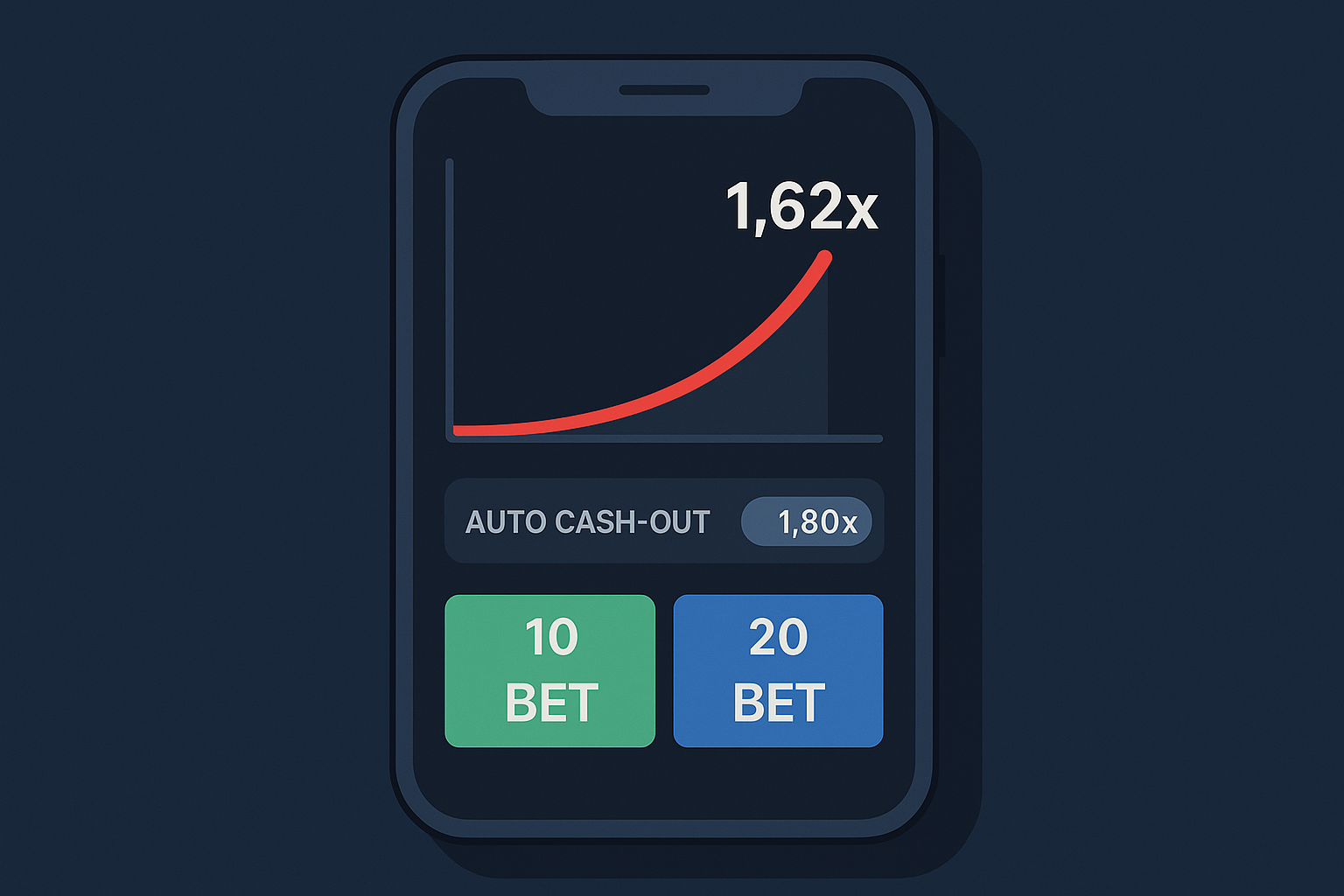
Here’s the ₹100 example in full. Say you set an auto cash-out at 2.00×. Under the standard crash model, the chance the multiplier reaches 2.00× before crashing is about 48.5%. So:
- 48.5% of the time you get ₹200 back (a ₹100 profit).
- 51.5% of the time the plane flies away first and you lose ₹100.
- EV = (0.485 × ₹100) − (0.515 × ₹100) = ₹48.50 − ₹51.50 = −₹3.00.
Three rupees per hundred wagered. That gap is not a bug or bad luck. It is the product, and it’s the reason the game exists.
How Aviator EV calculators work
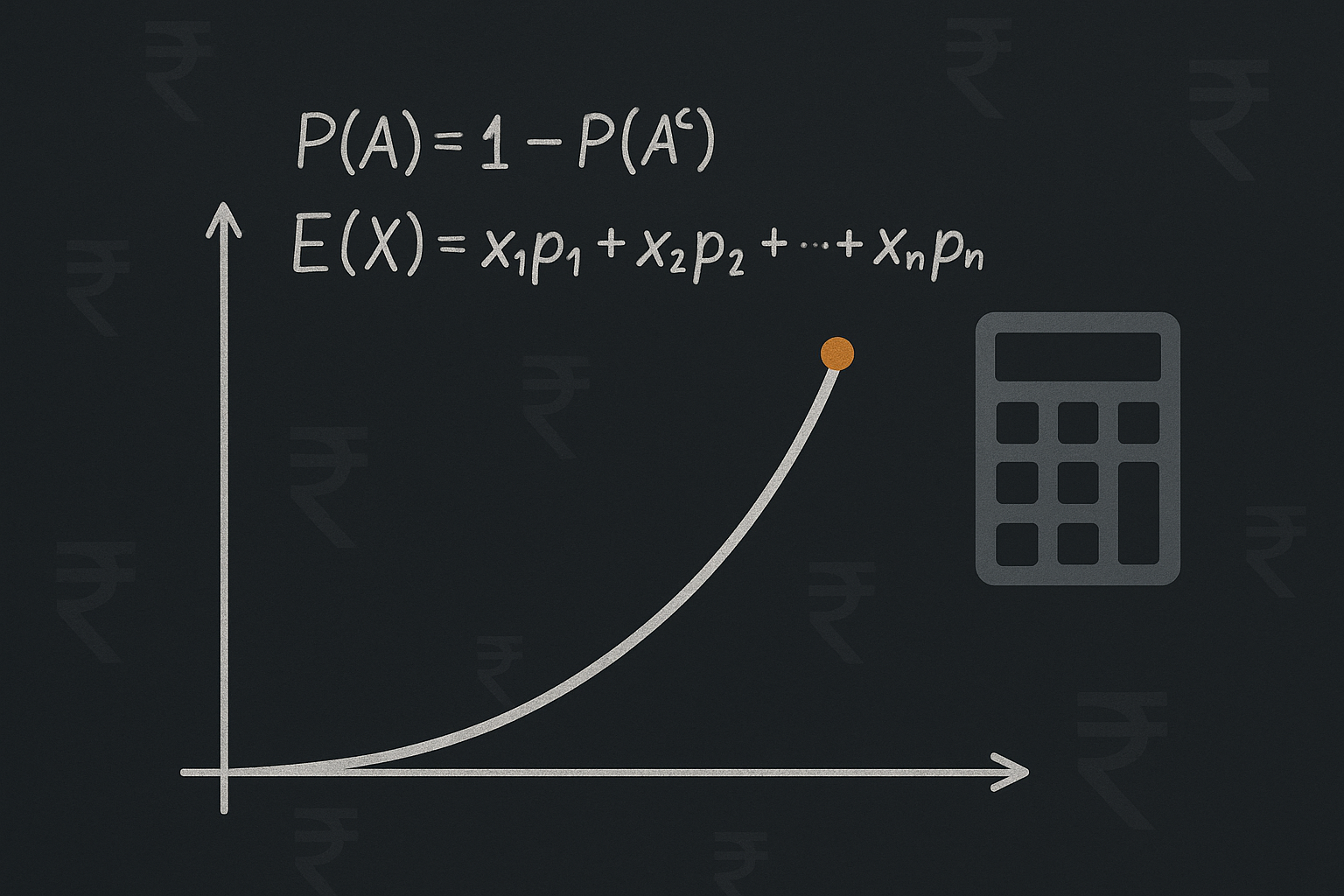
An Aviator EV calculator takes your stake, your target cash-out multiplier, and usually a round count, then returns the average result of that strategy over the long run. Most of them are doing one small piece of arithmetic: multiply each possible outcome by its probability, add them up, subtract your stake.
The typical inputs and outputs look like this:
- Inputs: stake per round (say ₹100), target multiplier (2.00×), number of rounds (1,000), sometimes a second bet with a different target.
- Outputs: probability of hitting the target, expected value per round, expected total result across the round count, and occasionally a standard deviation or “risk” figure.
A sample output for ₹100 at 2.00× over 1,000 rounds would read: hit probability 48.5%, EV per round −₹3.00, expected result −₹3,000. That last number is worth sitting with. You’ve cycled ₹100,000 in turnover, and 3% of it is the expected cost of playing.
The better calculators are honest about the model they use. The weaker ones present the hit probability as the headline and bury the EV, which flips a losing proposition into something that looks like a coin flip you win half the time. Both numbers are real; only one of them tells you what the strategy costs.
One more thing these tools cannot do: change the game. A calculator is a description of Aviator’s math, not a lever on it. If you want the underlying mechanics, our Aviator game mechanics guide covers how rounds are generated and cashed out.
Why Aviator’s expected value is always negative
Because the payout you receive when you win is deliberately smaller than the true odds of winning. That’s the entire mechanism, and no cash-out pattern touches it.
The 97% RTP reality
Aviator’s return to player is commonly published at around 97%, which means a 3% house edge (100% − 97%). Over millions of rounds across all players, the game returns roughly ₹97 for every ₹100 staked and keeps about ₹3. RTP is a long-run average across the whole player pool, not a per-session guarantee, and not something you can observe in an evening of play. If you want the general version of this idea, read our explainer on RTP and house edge.
The reason the edge shows up at every target multiplier is a neat piece of design. For a target of m×, the probability of reaching it is approximately 0.97 ÷ m. So the EV of a ₹100 bet is:
EV = ₹100 × m × (0.97 ÷ m) − ₹100 = ₹97 − ₹100 = −₹3.
The m cancels. Fair odds at 2.00× would require a 50% chance of getting there; you get about 48.5%. Fair odds at 10.00× would require 10%; you get about 9.7%. The shortfall is always the same 3%.
House edge vs cash-out strategy
Strategy in Aviator decides how your losses and wins are shaped, not their long-run sum. Cash out early and you win often in small amounts. Chase 50× and you lose most rounds and occasionally get a large payout. Split your stake across two bets, one at 1.30× and one riding higher, and you’ve built a smoother curve out of the same negative expectation. Averages of negative-EV bets are still negative EV.
So when a tool or a video claims “positive EV Aviator”, check what’s actually being claimed. Almost always it’s one of three things: a short winning sample presented as a system, a misread hit-rate figure, or a bonus or cashback promotion being folded into the maths. Promotions can genuinely change the arithmetic while they last, but then you’re evaluating the promotion’s terms, including wagering requirements and max cashout caps, not the game. The base game’s 3% edge doesn’t move.
How cash-out multipliers affect your EV
They don’t change your expected value. They change your variance, which is how wildly your actual results scatter around that expectation. This is the single most useful thing an EV calculator can teach you, and most players read it backwards.
The table below assumes a ₹100 stake and the 0.97 ÷ m probability model. “Swing per round” is the standard deviation, a rough measure of how far a single round tends to land from the average.
| Auto cash-out target | Approx. chance of reaching it | Return if it hits | EV per ₹100 | Swing per round (1 SD) |
|---|---|---|---|---|
| 1.20× | 80.8% | ₹120 | −₹3 | ≈ ₹36 |
| 1.50× | 64.7% | ₹150 | −₹3 | ≈ ₹72 |
| 2.00× | 48.5% | ₹200 | −₹3 | ≈ ₹100 |
| 5.00× | 19.4% | ₹500 | −₹3 | ≈ ₹198 |
| 10.00× | 9.7% | ₹1,000 | −₹3 | ≈ ₹296 |
| 100× | 0.97% | ₹10,000 | −₹3 | ≈ ₹995 |
Read the EV column downward: it never moves. Read the swing column: it grows by more than eight times between 1.20× and 10×. High targets don’t cost you more per rupee wagered, but they make your bankroll’s path far rougher, and a rough path with a negative drift is how players run out of money quickly.
Low targets have their own trap. A 1.20× auto cash-out wins about four rounds in five, which feels like control, so players raise stakes to make the small wins meaningful. Wagering ₹1,000 per round instead of ₹100 multiplies the expected cost from ₹3 to ₹30 per round. Losing streaks still happen: at 1.50×, five consecutive misses have a probability of roughly 0.6%, which sounds tiny until you play a few hundred rounds and it turns up more than once.
Reading EV calculator results critically
Treat the output as a description of a bet, not a recommendation. Three habits help.
- Find the EV number first, then the win rate. Hit probability answers “how often”, EV answers “what does it cost”. A tool that leads with “64.7% win rate at 1.5×” is quoting Aviator probability correctly and framing it misleadingly. That 64.7% comes with a 35.3% chance of losing your full stake, and the net is still −3%.
- Check the total, not the per-round figure. Minus ₹3 sounds like nothing. Multiply by your realistic session volume. Two hundred rounds at ₹200 a round is ₹40,000 of turnover and about ₹1,200 of expected cost, before any variance.
- Ask what model the tool assumes. If a calculator doesn’t state the RTP it’s built on, its numbers are decoration. Providers set the crash distribution, and it includes rounds that crash at or barely above 1.00×, which is why very low targets still lose sometimes.
Two claims deserve outright scepticism. The first is any “prediction” or “signal” feature. Aviator rounds are generated independently and, in provably fair implementations, you can verify each round’s outcome against server and client seeds after the fact. Verification proves a round wasn’t manipulated; it does not reveal a future result, because there’s nothing to reveal until the round is generated. The second is progressive staking dressed up as EV work. Doubling after losses raises your average turnover per session, and 3% of a bigger number is a bigger expected loss.
The bottom line: what EV really tells you
An Aviator EV calculator is a cost estimator. Feed it your stake and target and it tells you roughly what your chosen way of playing will cost per round and per session, and how bumpy the ride will be. Used that way, it’s genuinely useful for setting a budget. Used as a strategy engine, it’s a way to lose money with better vocabulary.
The three things worth remembering: expected value in Aviator is negative at every multiplier because the payout is set below the true odds; cash-out choice controls variance, not expectation; and a high win rate at low multipliers is not the same as a profitable strategy.
Play with money you’re prepared to lose, decide your session budget before you open the game, and use the deposit, loss and session limits your operator provides. If Aviator stops feeling like entertainment, take a cool-off or self-exclusion, and see our responsible gambling resources for support options. This article is educational; it isn’t a system, and no calculator makes a negative-EV bet a positive one.
FAQ
What is expected value in Aviator?
The average result per bet over the long run. With a 97% RTP, expected value is about −3% of your stake per round, so −₹3 on a ₹100 bet, regardless of the cash-out multiplier you choose.
Does an EV calculator help you win Aviator?
No. It calculates what a strategy costs and how volatile it is. It cannot change the crash distribution or the house edge, so it can’t turn a losing bet into a winning one.
Why is Aviator’s expected value negative?
Because the chance of reaching a multiplier is about 0.97 ÷ m rather than the fair 1 ÷ m. That 3% shortfall is the house edge, and it applies to every target equally.
How do cash-out multipliers affect EV?
They don’t. A 1.20× target and a 10× target both carry roughly −3% expected value. What changes is variance: higher targets win rarely and pay big, so your bankroll swings much harder.