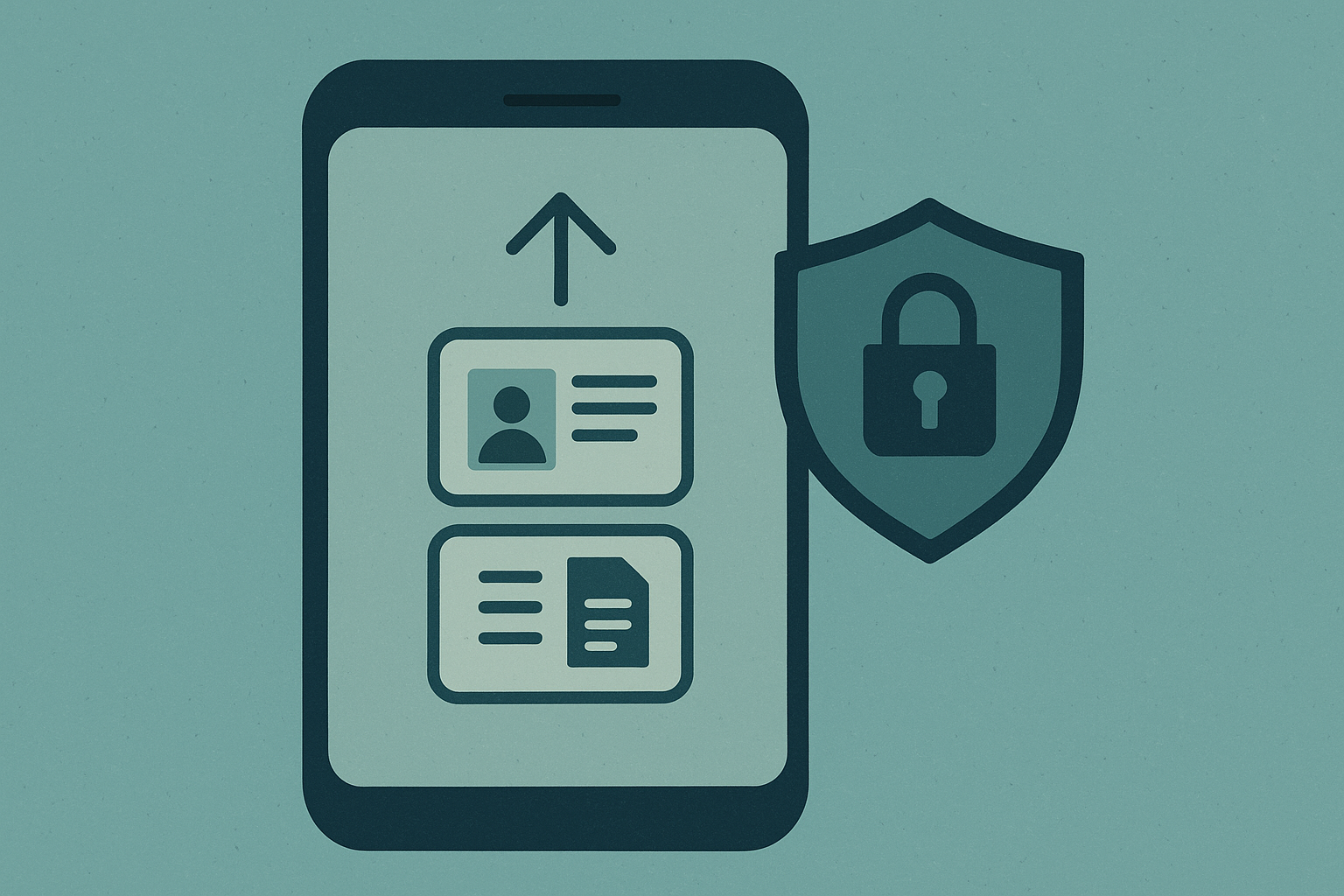
Casino KYC verification in India is the identity check an online casino runs before it releases your money, usually triggered by your first withdrawal request. You upload proof of who you are, where you live, and that the payment method belongs to you. It typically takes 24 to 72 hours, it only has to be done properly once, and it is a legal requirement for the operator rather than a stalling tactic.
If you have just requested a payout and got an email asking for your Aadhaar and a bank statement, nothing has gone wrong. This is the single most common thing new players panic about, and it is almost always resolved in a day or two once the right files are uploaded.
What is KYC verification and why do Indian casinos require it?
KYC (Know Your Customer) is the process of confirming that a player is a real, identifiable adult and that the account belongs to them. Every licensed gambling operator has to do it.
The reason is anti-money laundering (AML) law. Gambling accounts move money quickly and can be abused to wash funds, so licensing regimes require operators to identify customers, keep records, and flag suspicious activity. That obligation comes from the licence the casino holds, whether that’s Curaçao, Malta, or another jurisdiction, and it is reinforced by international AML standards that member countries, India included, have committed to. Operators that skip these checks risk fines or losing their licence, which is why no serious casino will make an exception for you.
There are three practical purposes behind the paperwork:
- Age and identity — confirming you are over 18 and that the name on the account matches the name on the ID.
- Fraud and account security — making sure nobody else has taken over your account or is cashing out to their own bank details.
- Payment ownership — proving the UPI ID, bank account, or card you’re withdrawing to is genuinely yours. Regulated operators generally pay back to the same source you deposited from.
Why does the check happen at withdrawal instead of registration?
Mostly friction. Casinos know that asking for documents on the signup screen makes most people abandon the process, so they allow you to register and deposit with basic details, then verify when money is going out. Some operators do verify earlier, and a few trigger checks once you cross a cumulative deposit or withdrawal threshold. Either way, the requirement doesn’t go away, so the smart move is to prepare the files before you ever hit “withdraw”.
Documents you’ll need for casino KYC in India
Three categories: identity, address, and payment method. Most Indian players get through with an Aadhaar or PAN card, a recent utility bill or bank statement, and a screenshot of their UPI or banking app.
| Document type | Commonly accepted in India | What it must show | Frequent rejection reasons |
|---|---|---|---|
| Proof of identity | Aadhaar card, PAN card, passport, driving licence, voter ID | Full name, date of birth, photo, document number, valid expiry | Blurred photo, cropped corners, expired document, name spelled differently than on the account |
| Proof of address | Electricity, gas, water, landline or broadband bill; bank statement; rental agreement; Aadhaar (if address matches) | Your name, full residential address, issue date within the last 3 months | Bill older than 3 months, address doesn’t match account details, bill in a parent’s or landlord’s name |
| Proof of payment method | UPI app screenshot showing your name and UPI ID, bank statement header, masked card photo, e-wallet profile page | Account holder name, last digits of the account/card, the method you deposited with | Full 16 digits or CVV visible, screenshot missing the name, withdrawing to a different account than the deposit source |
Identity verification documents
One government-issued photo ID is usually enough. Aadhaar and PAN are the two most commonly submitted by Indian players; a passport is the cleanest option if you have one because it carries the photo, date of birth and signature on a single page. Photograph or scan the whole document, all four corners inside the frame, no glare and no finger covering any detail. If the ID is double-sided, send both sides.
The name on the document has to match the name on your casino account. “Rahul K.” on the account versus “Rahul Kumar Sharma” on the Aadhaar is one of the most common reasons a submission bounces. If you registered with a shortened name, contact support and ask them to correct it before you upload.
Address proof requirements
Address proof must be recent, normally issued within the last three months, and it must carry your name plus the full address. Utility bills and bank statements are the standard choices. A bank statement PDF downloaded from your netbanking portal is fine at most casinos; you can black out the transaction lines and leave the header with your name, address and account number visible.
If you live in shared or rented accommodation and every bill is in someone else’s name, a registered rental agreement or a bank statement addressed to you usually works. Ask support what they accept rather than guessing and burning a rejection cycle.
Payment method verification
This is the step most people forget, and it’s the one that holds up UPI withdrawal verification most often. The casino needs to see that the payout destination belongs to you. For UPI, a screenshot from your app showing your registered name and UPI ID is normally accepted. For bank transfers, the statement header with your name, account number and IFSC. For cards, a photo showing only the first six and last four digits, with the CVV covered.
Verification is much smoother when you withdraw to exactly the method you deposited with. If you’re still choosing how to fund your account, our guide to the best payment methods to play Aviator in India covers which options are easiest to verify and how fast each one pays out.
How KYC affects your withdrawal timeline
Expect 24 to 72 hours for document review at a well-run casino, and add that to the normal withdrawal processing time. Busy weekends and public holidays stretch it; some operators clear documents in a few hours.
Here’s what actually happens during that window:
- You request a withdrawal and the casino places it in a pending or “on hold” state.
- The payments or compliance team reviews your uploads against your account details.
- If something is unreadable or missing, you get an email asking for a replacement, which restarts the clock.
- Once approved, the withdrawal moves into the payment queue. UPI and e-wallet payouts often land the same day after approval; bank transfers commonly take one to three working days.
The genuine upside: this is a one-time payout delay. KYC is tied to your account, not to each transaction, so second and third withdrawals usually skip straight to payment processing. Players who verify on day one and then cash out often describe payouts arriving within hours.
Two things can trigger a re-check later. Changing your bank account, UPI ID or address means submitting fresh proof for the new detail. And unusually large withdrawals can prompt an enhanced check, sometimes including a source-of-funds question. That’s standard AML procedure at any regulated operator, not a sign you’ve been singled out. Worth remembering too that gambling winnings in India are taxable, with TDS applied to net winnings under current rules, so the amount credited to your bank may differ from the figure in your casino balance. Treat that as general information, not tax advice.
Protecting your personal information during KYC
Handing over an Aadhaar photo makes people uneasy, and that instinct is healthy. At a licensed casino the process is reasonably safe: uploads go through an encrypted connection, documents are stored under data protection obligations attached to the licence, and access is restricted to the compliance team. Many operators use third party verification providers who specialise in exactly this and never expose your files to casual staff.
What a reputable operator does:
- Accepts uploads only through a secure area of your account or a verified support address, never over WhatsApp or Telegram.
- Publishes a privacy policy naming the licence holder, the company address and how long documents are retained.
- Asks only for what the check requires, then confirms in writing when verification is complete.
Red flags worth walking away from:
- Requests for your full card number with CVV, your netbanking password, or an OTP. No legitimate casino needs any of these.
- A demand for documents sent to a personal Gmail address or chat app.
- Endless new document requests each time you ask about your payout, with no clear reason given. This is the classic pattern at unlicensed sites.
- No visible licence details anywhere on the site.
Practical habit: mask what isn’t needed. Cover the middle digits of card numbers, black out transaction details on statements, and keep a folder of prepared, pre-masked copies so you’re never rushing.
Tips to speed up your KYC verification
Most rejections come down to bad photos and mismatched details, both avoidable.
- Submit everything at once. Identity, address and payment proof in one go. Drip-feeding documents means a new review queue each time.
- Shoot in daylight, flat on a table. No flash glare, no shadow across the text, all four corners visible.
- Check the file rules. JPG, PNG or PDF, usually under a few megabytes. Screenshots of screenshots and phone photos of a laptop display get rejected.
- Match your details exactly. Registered name, date of birth and address should mirror your documents before you upload anything.
- Use a bill under three months old. An eight month old electricity bill is the most common address-proof failure.
- Verify before you need the money. Nothing stops you from completing KYC right after signing up. Do it while you’re up nothing and there’s no pressure.
- Keep the confirmation email. If a payout stalls later, having the “verification complete” message speeds up support conversations.
One more thing that matters more than any document tip: verification only protects money you could afford to stake in the first place. Set a deposit limit, treat the spend as entertainment cost rather than income, and use the cool-off or self-exclusion tools if play stops feeling like a choice. Every game in the casino carries a house edge, which means the maths favours the operator over time no matter how smooth your withdrawals are.
FAQ
Why does a casino ask for KYC?
Because its licence obliges it to identify customers under anti-money laundering rules, confirm players are adults, and make sure the payout is going to the account holder. It applies to every player, not just big winners.
What documents are needed for casino KYC in India?
Usually three: a government photo ID (Aadhaar, PAN, passport, driving licence or voter ID), an address proof issued in the last three months (utility bill, bank statement or rental agreement), and proof that the payment method is yours (a UPI app screenshot, bank statement header or masked card image).
Does KYC delay withdrawals?
Your first one, yes, typically by 24 to 72 hours while documents are reviewed. After approval the check doesn’t repeat, so later withdrawals go straight to payment processing unless you change your bank details or request an unusually large amount.
Is casino KYC safe?
At a licensed operator, generally yes: documents are uploaded over an encrypted connection and handled under the data protection terms of its licence. Upload only through the casino’s own account area or official support address, never over a chat app, and never share an OTP, CVV or netbanking password.
18+ only. Gambling involves risk of losing money. If it stops being fun, use deposit limits, cool-off or self-exclusion tools, or contact a support helpline.