Slot paylines are the patterns a game checks to decide whether your spin won. Everything else, ways-to-win, 243-ways, Megaways, is just a different method of deciding which symbol positions count as “connected”. The system changes how often you win and how big those wins feel. It does not change the fact that the game keeps a house edge.
Here is how the three main win-evaluation systems work, with the arithmetic behind each one, so you can look at a slot’s info screen and actually understand what it’s telling you.
What are slot paylines? The basics explained
A payline is a predetermined pattern of symbol positions across the reels. If matching symbols land on that exact pattern, the game pays. If they land on the grid in a shape the paytable doesn’t list, you get nothing, even if three identical symbols are clearly visible on screen.
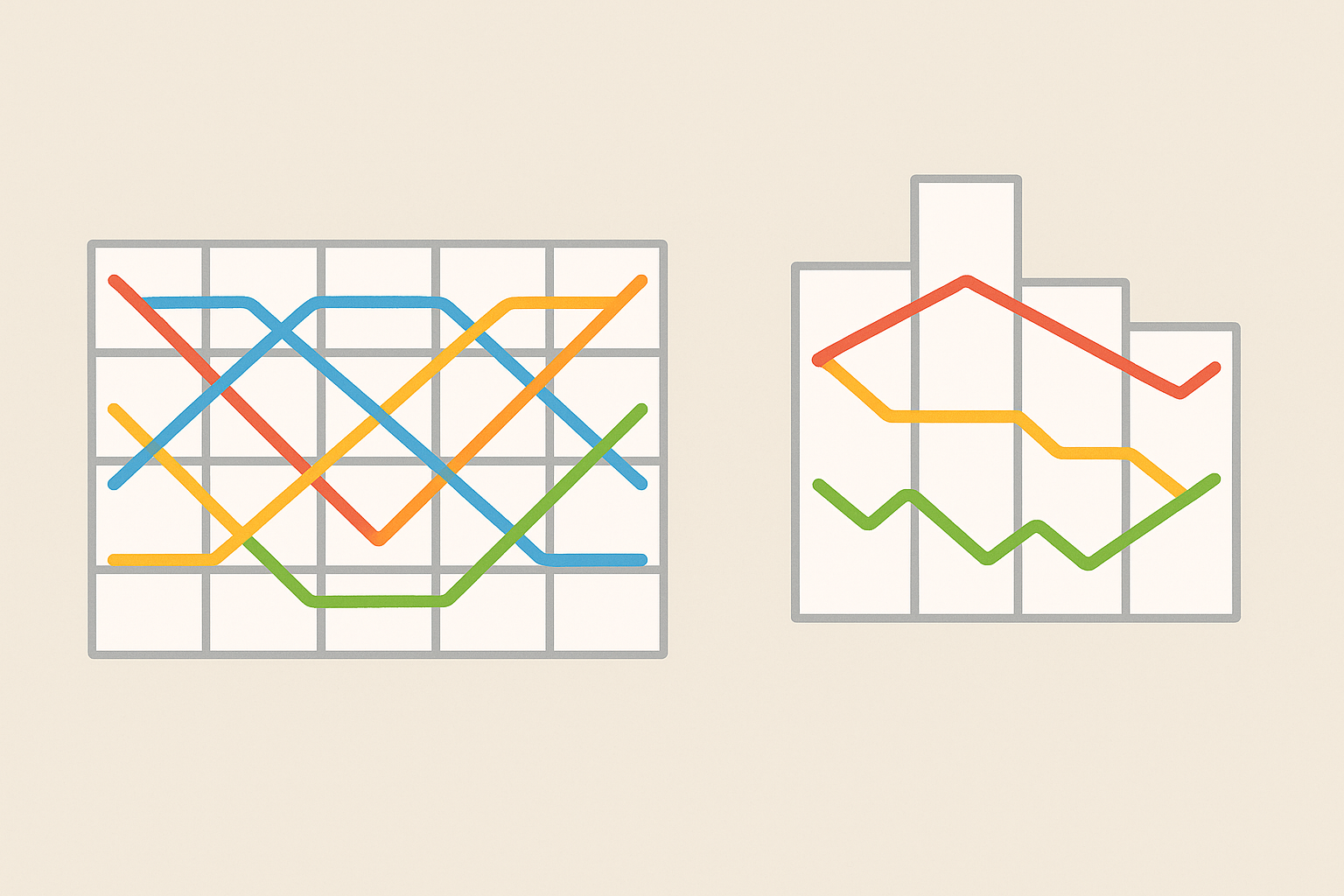
Picture the most common slot layout: 5 reels wide and 3 rows tall, so 15 symbol positions in total. A game with 20 paylines draws 20 fixed routes through those 15 positions. Some are straightforward:
- Line 1: straight across the middle row
- Line 2: straight across the top row
- Line 3: straight across the bottom row
- Line 4: a V shape, top-middle-bottom-middle-top
- Line 5: an inverted V
- Lines 6 to 20: zigzags and steps that mix rows in other orders
Almost all payline slots evaluate left to right, starting from reel 1. Three matching symbols on reels 1, 2 and 3 pay. The same three symbols on reels 3, 4 and 5 usually pay nothing, because the run didn’t begin on the leftmost reel. A minority of games pay both ways, and those say so clearly in the rules.
How paylines are counted
The number you see advertised, 10 lines, 20 lines, 40 lines, is simply how many patterns the developer chose to draw. It isn’t derived from the grid size. Two slots with identical 5×3 layouts can have 9 lines and 50 lines respectively, because one designer drew fewer routes and paid more per hit, while the other drew more routes and paid less per hit.
Each payline is checked independently on every spin. Land a five-symbol run that happens to sit on two overlapping patterns and both pay.
Active vs total paylines
Total paylines are all the patterns the game has. Active paylines are the ones you’re betting on this spin. Older slots let you switch lines off to lower your stake, which sounds thrifty but creates a trap: a winning combination on a line you deactivated pays nothing.
Most modern releases removed the choice. Lines are fixed and you adjust the coin value or total bet instead. When a slot does let you choose, the sensible approach is to keep all lines active and reduce the bet per line, so you’re never watching a win land on a switched-off pattern.
Ways-to-win slots: how 243 ways actually works
Ways-to-win slots drop fixed patterns entirely. Instead of checking drawn routes, the game asks a simpler question: does this symbol appear anywhere on reel 1, anywhere on reel 2, anywhere on reel 3, and so on? Adjacent reels are all that matter. Row position is irrelevant.
The math behind 243 ways
On a 5-reel, 3-row grid, each reel shows 3 symbol positions. Take one position from each reel and you get one possible path across the grid:
3 × 3 × 3 × 3 × 3 = 243
That’s where the figure comes from. It isn’t a marketing number, it’s the count of distinct five-reel paths through a 3-row grid. A 6-reel version with 3 rows gives 3⁶ = 729 ways. The same formula produces the “1,024 ways” you’ll see on 4-row, 5-reel games, since 4⁵ = 1,024.
For a three-symbol win, only reels 1, 2 and 3 are involved, so there are 3 × 3 × 3 = 27 paths that can pay. Compare that with a 25-payline slot, where a specific three-symbol combination can only pay if it lands on one of the 25 drawn shapes.
Ways-to-win vs paylines: differences that matter
Two practical differences. First, 243-ways slots almost always charge a single total bet per spin rather than a bet per line, so you can’t switch ways off. Second, wins tend to be more frequent and individually smaller, because there are more paths but the paytable values are scaled down to compensate.
Both systems still evaluate left to right from reel 1, and both use an RNG to decide each reel’s stop independently. Nothing about the counting method makes one spin more “due” than another.
What does Megaways mean? Variable reel systems
Megaways, a mechanic licensed from Big Time Gaming, takes ways-to-win one step further: the number of symbols on each reel changes every spin. Instead of a fixed 3-row grid, each of the 6 reels lands with anywhere from 2 to 7 symbols. The count of win-ways is recalculated after every spin.
How Megaways calculates win-ways
Same multiplication, different inputs. Multiply the symbol count on each of the six reels:
| Symbols per reel (1–6) | Calculation | Ways to win |
|---|---|---|
| 2, 2, 2, 2, 2, 2 | 2⁶ | 64 |
| 4, 5, 6, 3, 7, 2 | 4×5×6×3×7×2 | 5,040 |
| 7, 7, 7, 7, 7, 7 | 7⁶ | 117,649 |
That 117,649 figure is the maximum, and it’s where the name comes from. The minimum is 64. Most spins land somewhere in between, which is why the ways counter on screen keeps jumping around. Many Megaways titles also add a horizontal top reel that contributes extra symbols to the middle reels, feeding into the same calculation.
A big ways number does not mean a big win is close. 117,649 ways with mismatched symbols pays exactly zero.
Cascading wins and multipliers
Most Megaways slots pair the variable reels with cascading wins (also called tumbling or reaction wins). Symbols that formed a winning combination are removed, symbols above drop down to fill the gaps, and the game re-evaluates. One paid spin can produce several consecutive wins before the cascade stops.
In the free spins round, many of these games attach a multiplier that climbs with each cascade, which is where the eye-catching maximum payouts in the paytable come from. Those maximums are rare outcomes, not typical ones. If you want the fuller picture of how features like these are funded, our guide to slot bonus features goes deeper.
Do more paylines mean better odds?
No. This is the most common misconception about slots, and the answer is genuinely straightforward: the RTP is built into the game’s overall math, not into the number of paylines. A 96% RTP slot returns roughly ₹96 per ₹100 wagered over the long run whether it has 9 paylines, 243 ways or 117,649 Megaways. The 4% house edge stays put.
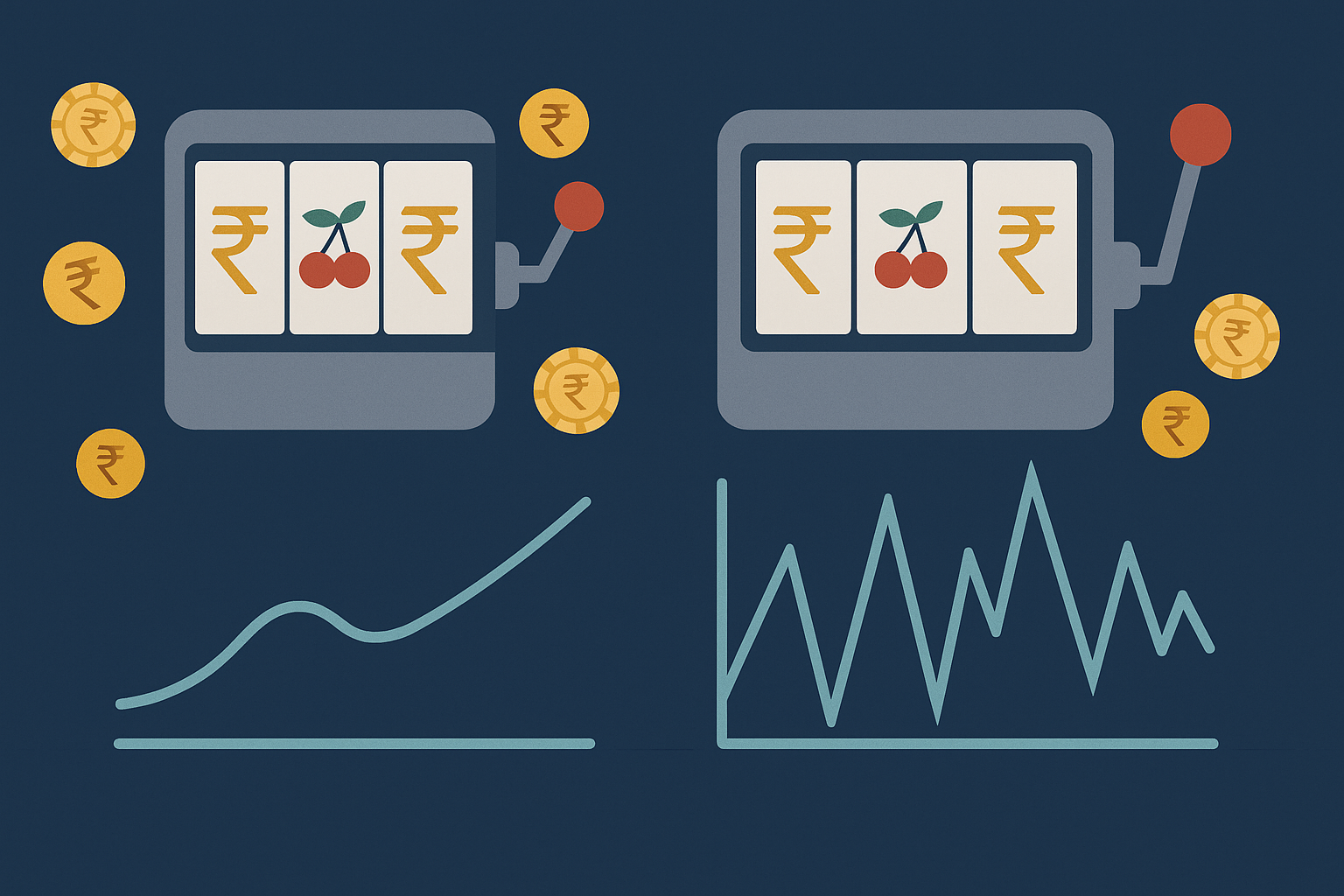
What changes is the shape of the results. More ways to win generally means higher hit frequency, more small wins that return less than your stake, and prizes scaled down so the total math still balances. Fewer paylines means fewer hits with larger individual payouts.
Bet-per-line arithmetic confuses people too. On a 20-line slot at ₹1 per line, your actual stake is ₹20 per spin, not ₹1. Deactivating 10 lines halves your stake to ₹10, but it also halves the patterns being checked. You haven’t improved your odds, you’ve just reduced your exposure. Megaways and most ways-to-win games sidestep this by quoting one total bet.
Which system should Indian players choose?
How slot paylines work should influence your choice less than your bankroll and your tolerance for dry spells. Here’s a quick comparison:
| System | Typical grid | Ways evaluated | Betting model | Usual feel |
|---|---|---|---|---|
| Fixed paylines | 5 reels, 3 rows | 9–50 drawn patterns | Bet per line, sometimes selectable | Predictable, easy to follow |
| Ways-to-win | 5 reels, 3–4 rows | 243 or 1,024 fixed ways | Single total bet | Frequent small wins |
| Megaways | 6 reels, 2–7 symbols each | 64 to 117,649, varies per spin | Single total bet | Swingy, long dry stretches |
For small bankrolls
Fixed-payline slots usually offer the lowest total spin cost, often ₹10 or less at Indian-facing casinos, and lower volatility on the classic 9 to 20 line games. Steadier small returns stretch a modest balance further and make it easier to see where your money went.
For bonus hunters
Read the bonus terms before the paytable. Two clauses matter: the max bet cap while a bonus is active (breach it and winnings can be voided) and game weighting, since slots usually count 100% toward wagering while table games count much less. A ₹1,000 bonus at 30× wagering means ₹30,000 of turnover, so a slot with a small minimum bet and reasonable hit frequency is easier to grind through than a high-variance Megaways title that can run cold for hundreds of spins.
For high-variance players
Megaways with cascading wins and multiplying free spins produces the widest swings. The trade-off is real: long stretches with nothing, funded by the same RTP as any other game. If you play these, size your bet so a few hundred blank spins doesn’t end your session, and check the volatility rating in the game info panel first.
None of these systems is beatable. Each one is a different way of presenting the same negative expected value, and every spin is independent of the last. Set a deposit limit before you play, treat the money as entertainment spend, and use the cool-off and self-exclusion tools your casino offers if play stops feeling like a choice. Slots are for adults only, and the minimum age depends on where you are: it is commonly 18+, but some regions and operators require 21+, so check the rules that apply to you.
FAQ
What are slot paylines?
Predetermined patterns across the reels that the game checks for matching symbols. If symbols land on a listed pattern, usually starting from reel 1 and running left to right, the spin pays according to the paytable.
How do ways to win differ from paylines?
Paylines require symbols to land on specific drawn shapes. Ways-to-win only requires a matching symbol somewhere on each consecutive reel, with row position irrelevant. A 5-reel, 3-row grid gives 3⁵ = 243 such paths.
What does Megaways mean?
A mechanic where each of 6 reels shows a variable 2 to 7 symbols per spin. Ways to win are recalculated each spin by multiplying the symbol counts, giving a minimum of 64 and a maximum of 117,649.
Do more paylines mean better odds?
No. RTP and house edge are fixed by the game’s overall math. More ways to win typically raise hit frequency while shrinking individual payouts, so the long-run return stays the same.